
For schools
Intervene earlier, without making the work feel younger
CanDoLearn helps schools supporting pupils aged 11-17 keep the level right while making the pupil experience more age-appropriate, easier to start, and easier for staff to review.
Looking for primary school support? See the Primary Schools page. For reading-specific secondary support, see Secondary Reading Intervention.
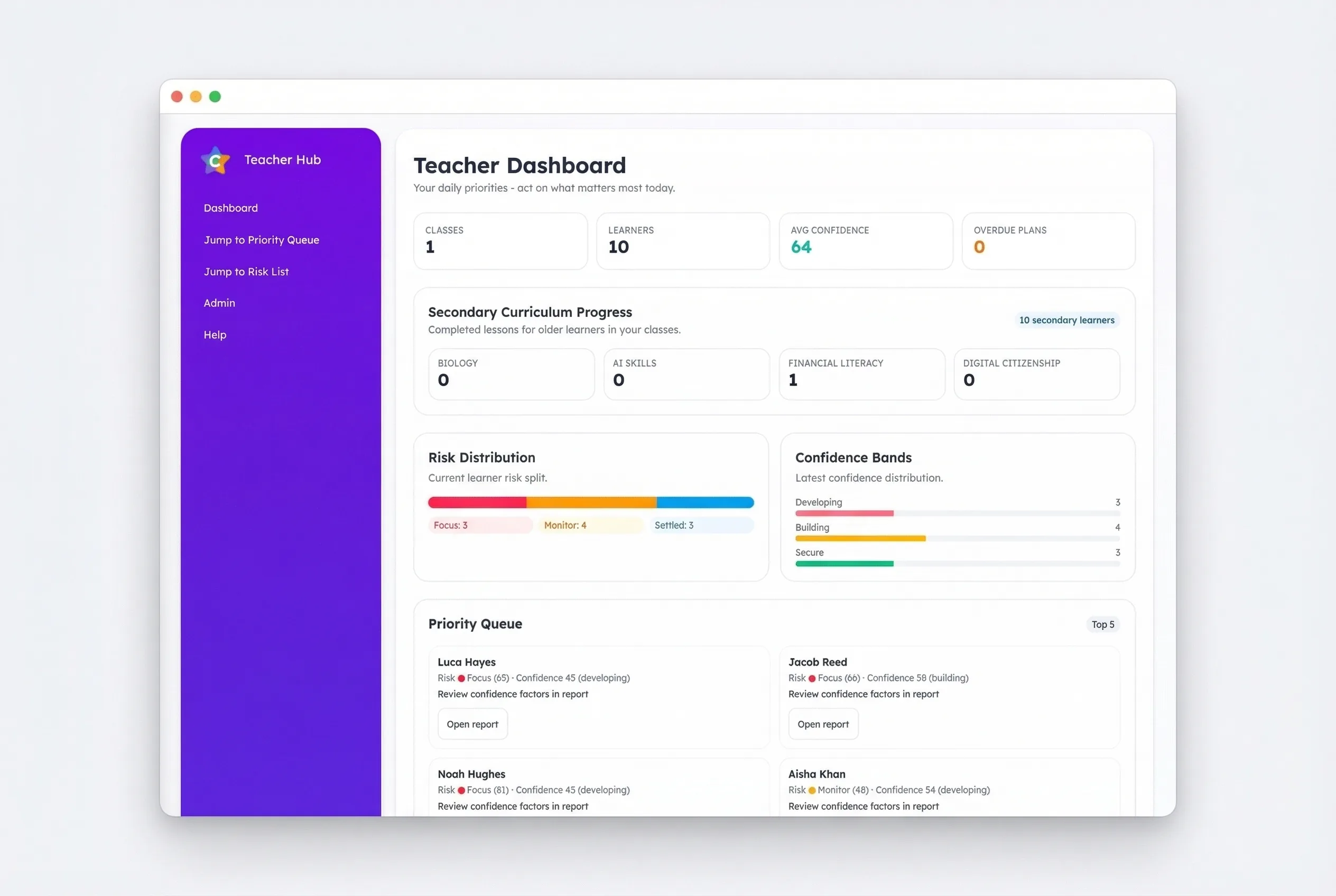
Intervention routines
Designed for real intervention routines
KS3 reading intervention
KS4 confidence rebuilding
SEND support
Small-group literacy work
Transition and catch-up
Teacher-reviewed independent practice
The problem in schools
The difficult middle ground staff know too well
- Older pupils reading below expected level
- Work that is technically accessible but clearly feels too young
- Refusal, avoidance and low completion
- Staff stuck between keeping the level right and protecting dignity
What changes
What staff notice when the work feels right
- Pupils start work more willingly
- More tasks get completed
- Less time spent managing disengagement
- Work feels more appropriate for their age
Transparency
What CanDoLearn is and what it is not
CanDoLearn is
- An age-respectful intervention support tool.
- A way to create level-matched reading, spelling, writing and maths practice.
- A teacher-led workflow for assigning and reviewing support.
- A pilot-friendly evidence tool for completion, confidence and progress indicators.
CanDoLearn is not
- It is not a replacement for qualified teaching.
- It is not a formal diagnostic assessment.
- It is not a replacement for a school's chosen phonics, literacy or maths scheme.
- It is not a safeguarding decision-maker.
- It does not make high-stakes automated decisions about pupils.
Before and after
A clearer contrast for school teams
Before
- Materials feel too young
- Pupils avoid starting
- Low completion and patchy engagement
After
- Age-appropriate presentation
- Pupils complete more work
- More consistent engagement
How it fits into school
Practical enough for real school routines
- Set work in under 30 seconds
- Use it in intervention, lessons, or homework
- No heavy setup for staff
- Works alongside your existing curriculum and teaching
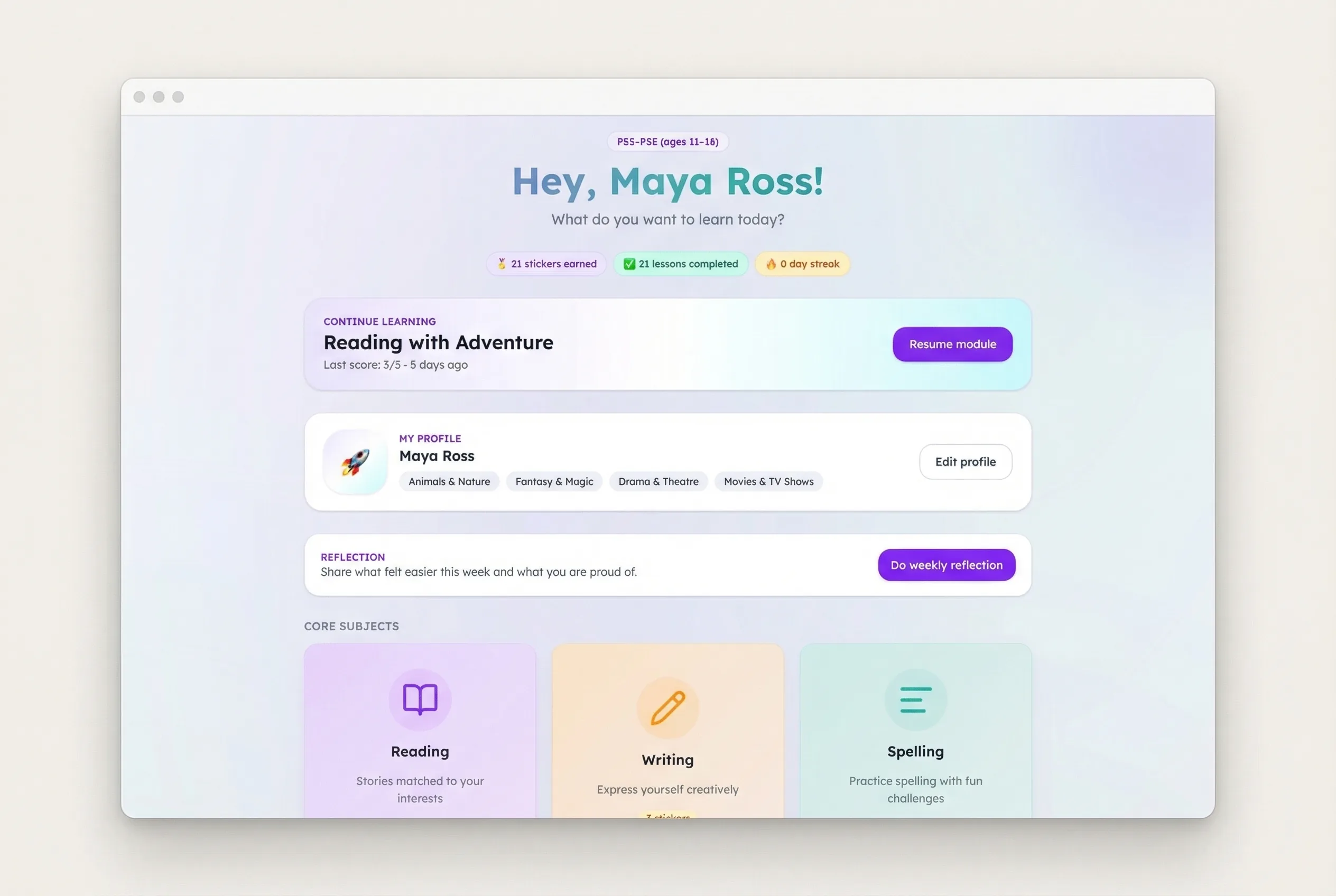
Pilot review
What schools review in a pilot
- Starting point for the pupils in the pilot
- Task completion over the review period
- Engagement patterns and where support was needed
- Whether the school wants to widen rollout
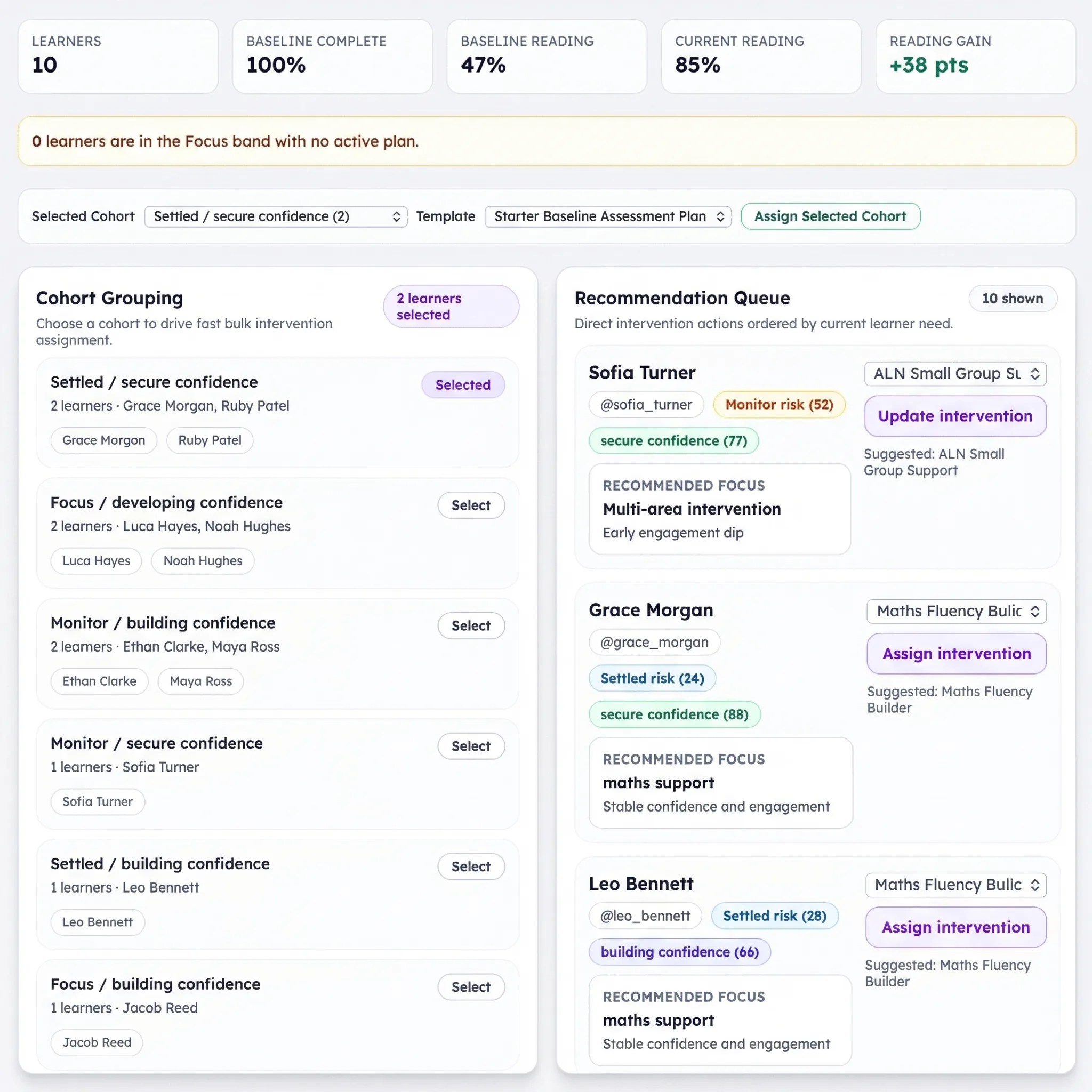
6-week pilot
What schools get from a 6-week pilot
Week 0
Setup and cohort selection
Week 1-2
Baseline tasks and learner familiarisation
Week 3
Midpoint review
Week 4-5
Continued intervention use
Week 6
Evidence review and next-step recommendation
Pilot outputs
See how this works with your pupils
Book a demo or start with a pilot if you want to review engagement, completion and next-step decisions in a small group first.