
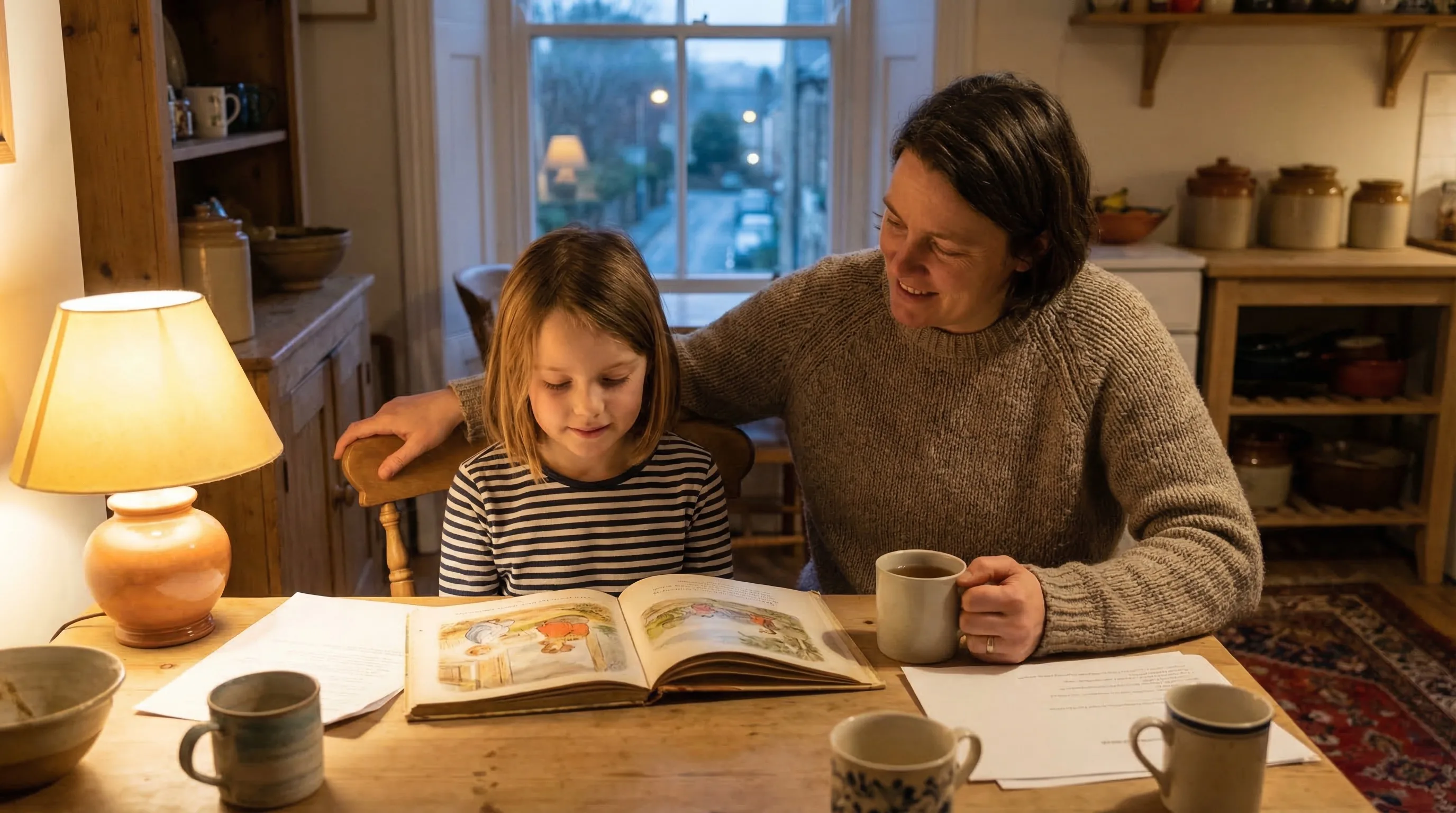
Every week, parents across the UK sit down with their child for reading practice and come away frustrated. The child wriggles, guesses wildly at words, or simply shuts down. The parent feels helpless - even guilty. If that sounds familiar, the first thing to know is this: the difficulty is rarely about effort or intelligence. Literacy challenges have real, identifiable causes, and they respond to the right kind of support.
Why Some Children Find Reading Hard
Reading looks like a single skill, but it is actually a chain of sub-skills working together: phonemic awareness, phonics knowledge, fluency, and vocabulary. A weakness at any link in the chain can slow everything down.
For around 10% of children, that weakness is rooted in dyslexia. But plenty of children without a diagnosis still struggle, particularly if they missed foundational phonics teaching in Reception or Year 1, or if English is an additional language at home.
Whatever the cause, one thing is consistent: children who struggle with reading often develop an emotional response to it. Anxiety, avoidance, and low confidence can become bigger barriers than the underlying literacy gap itself.
The Five Habits That Make the Biggest Difference
1. Keep sessions short and consistent
Short daily practice outperforms long infrequent sessions. Aim for ten to fifteen minutes every day rather than a forty-five minute marathon once a week.
2. Read aloud together, not just side by side
Paired reading reduces pressure dramatically. Hearing a fluent adult model phrasing and expression teaches children what reading is supposed to sound like.
3. Follow your child's interests ruthlessly
A reluctant reader who loves football will engage with a match report in a way they never will with a prescribed school reader. Comics, fact books, gaming guides, and joke books all count as reading.
4. Play word games before you open a book
Phonological awareness can be strengthened without any print at all. Rhyming games, I Spy with the initial sound, and clapping syllables in words all build the foundations reading sits on.
5. Separate praise from accuracy
Celebrate effort, strategy, and courage rather than only celebrating correct answers. Praising process over outcome builds resilience and, over time, performance.
When Home Support Is Not Enough
Home practice is powerful, but it has limits. If your child is significantly behind their peers, showing signs of distress around reading, or if your school has flagged concerns, it is worth asking about a formal assessment.
Structured literacy programmes based on systematic phonics and explicit instruction have the strongest evidence base for children with reading difficulties. Look for programmes that are adaptive and adjust the pace and content to where your child actually is.
Related guidance
Want to see how CanDoLearn supports children at home?
Our parent-facing dashboard gives you visibility of every lesson, progress in real time, and literacy activities designed around each child's reading level.
See the parent experience →